 True-Doctor
Stopping money leaks at the cashier: ten checks
Money rarely leaves a clinic in one big theft. It leaves a few thousand at a time: a test not billed, a discount nobody approved, a mobile money payment nobody matched. These ten checks close the common gaps.
Ten checks
- Every service, test and medicine goes on the bill as it is done, not from memory at the end.
- No visit closes without an invoice. Look every week for visits that did.
- One price list. Nobody types a price by hand.
- Every discount has a reason and a name. The owner reviews the large ones each week.
- Every payment gets a numbered receipt, including cash.
- Every mobile money payment carries its transaction reference, and the references are matched against the statement.
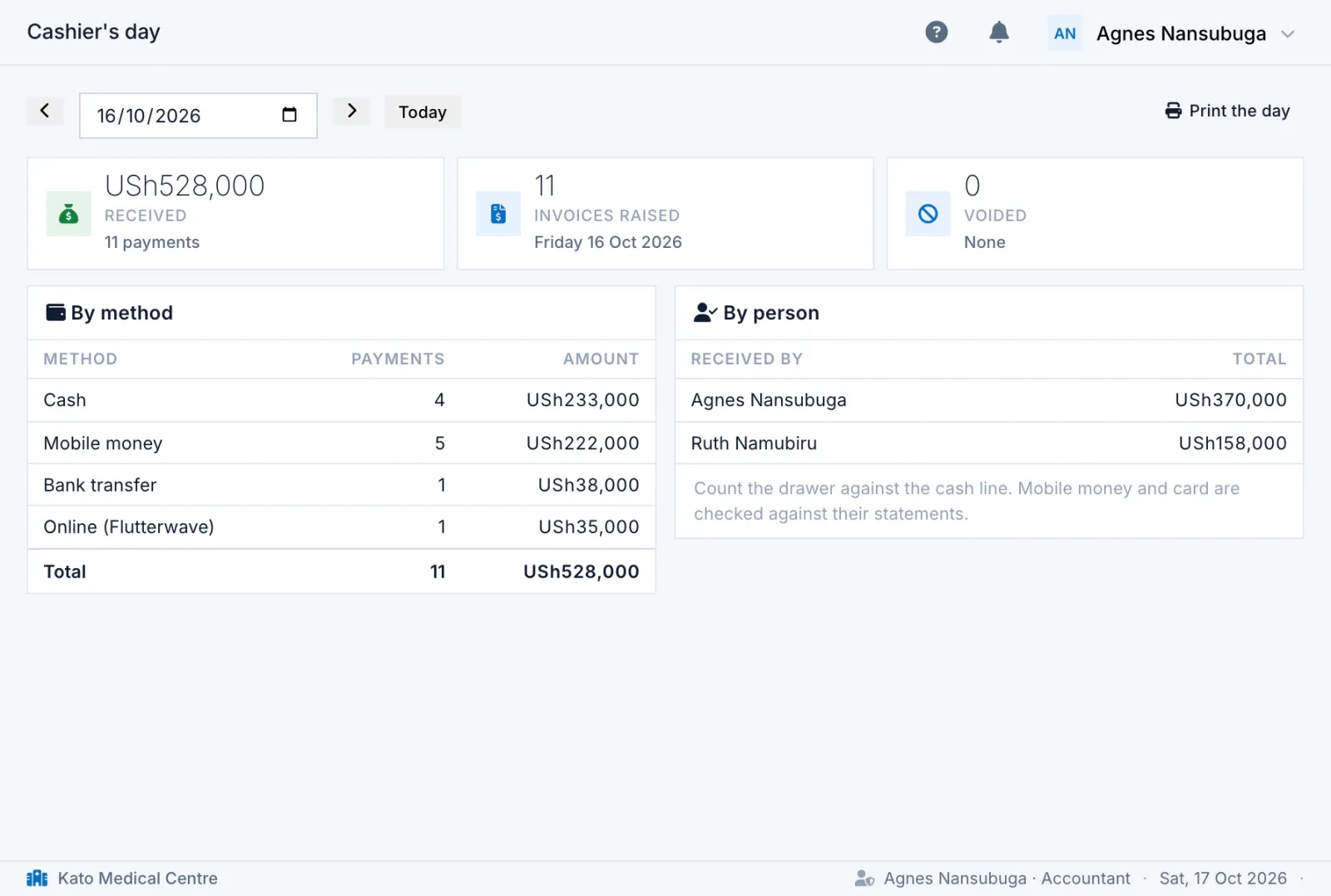
- The drawer is counted at the end of each shift against what the system says, by method.
- Where there are enough people, the person who bills is not the person who takes the cash.
- Voids and refunds are done by a manager, with a reason written down.
- The owner reads the day's figures every morning: money in, what was left unpaid, discounts.
Why the small checks matter
Studies of workplace fraud find that small organisations lose a larger share of their income than big ones, and that most losses are found by a tip or by a routine check, not by chance. A routine that someone actually follows is the protection.
Make the checks routine and visible, not an accusation. Staff who know the drawer is counted every evening are rarely tempted, and the honest ones are protected when figures are questioned.
Receipts and the tax man
Find out from URA whether your clinic must issue electronic receipts through EFRIS. Either way, a numbered receipt for every payment is the first thing an auditor, and an owner, will ask for.
Sources
- Association of Certified Fraud Examiners: Occupational Fraud, a Report to the Nations
- Uganda Revenue Authority: EFRIS